
Stories we believe become real
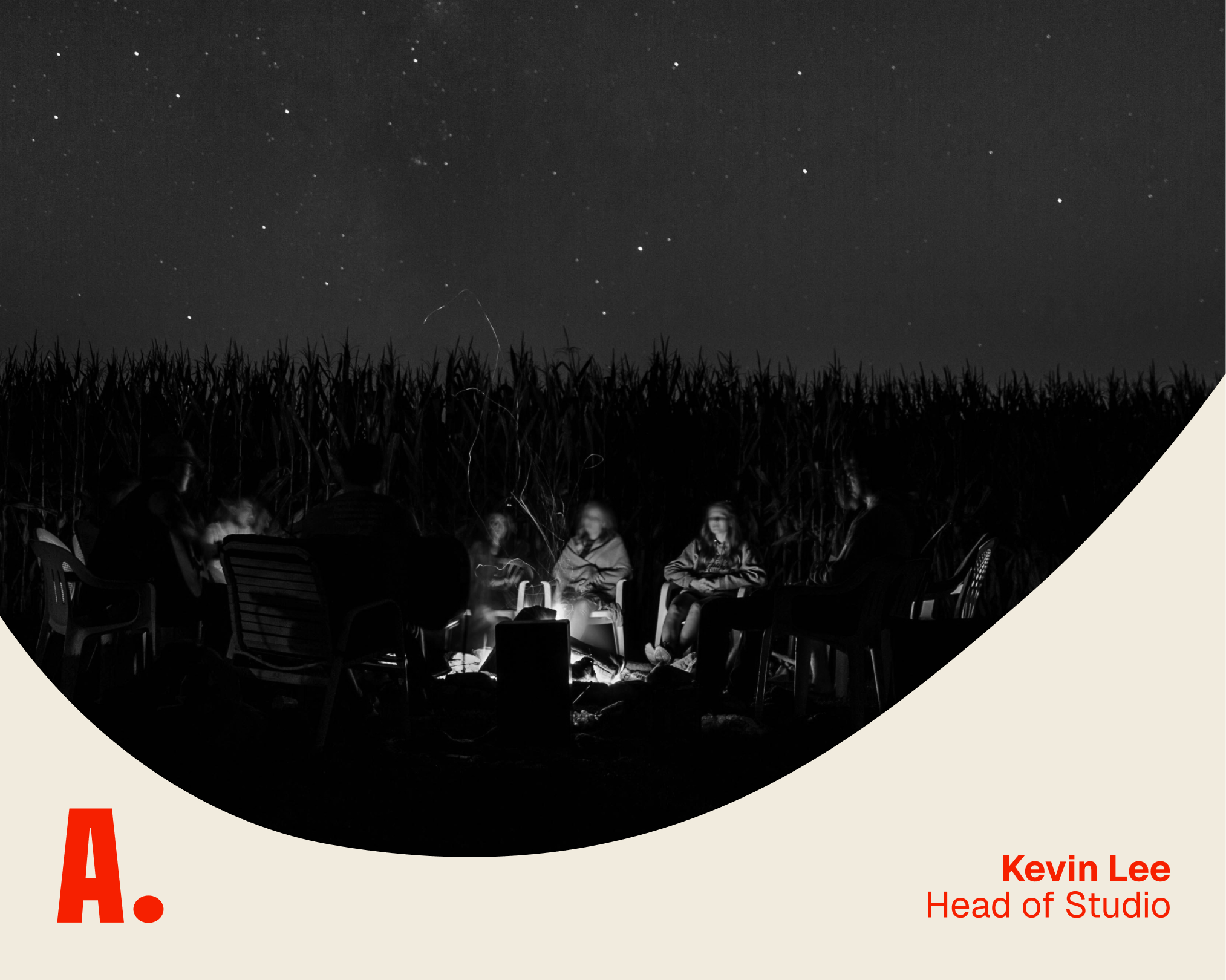
I'll be honest, Yuval Harari is an influence, and he's got me stuck on one question: why is it that humans run the planet?
It's not that we're stronger, or faster, or smarter one to one. Plenty of animals communicate. Bees do logistics. Whales carry a tune. What no other animal does is believe in things that aren't there, and then organize a whole life around them. Gods. Nations. Money. Limited liability companies. Next Tuesday.
That's the trick. Not language: fiction. A story enough people agree to believe becomes real enough to build a society on. You hand a stranger a rectangle of paper and they hand you lunch, because you both believe the same story about what the paper is worth. The paper is just paper. The worth is the fiction, and it holds because everyone agrees to it.
Without the fiction, there's no belief. Without the belief, there's no us: no company, no market, no shared anything. It's not decoration on top of human life. It's the foundation under it.
Once you see it, you can't unsee it, and it reframes the whole job. A brand isn't a logo, a colour, or a tone of voice. A brand is one of those fictions: a story a group of people agree to believe about who a company is and why it's worth their attention. That's not the soft part of the work. That's the mechanism. The load-bearing wall.
Which brings me to the whole AI thing.
Yes, the tools can now produce fluent language faster and at more volume than any human ever could. This is presented, roughly weekly, as a crisis for people who make things with words. It isn't. Fluency was never the scarce resource. Language has been cheap since Gutenberg: the world has never been short of competent sentences. Walk through any airport and count the brands saying the same three things in the same confident voice.
What stays scarce is a story worth agreeing to believe. Finding that takes the parts that don't come off a production line: a point of view, taste, the nerve to say the specific true thing instead of the safe generic one. A machine will give you a thousand ways to phrase it. It can't tell you which one is true: it doesn't know your company, hasn't sat in the awkward founder conversation, and has no stake in whether anyone believes you.
Anyone can make content now. That was already true, and now it's very true. The needle doesn't move on volume. It moves on a story people choose to believe: about a company, about a category, about themselves.
That last one is the quiet one. The stories aren't only out there holding societies and markets together. They're in here too, holding you together: the running account of who you are and what you're for. Get that story right and everything downstream gets easier. Get it wrong and no volume of fluent output will save it.
That's the part we do. Not the output: the story underneath it. The oldest technology we have, and the one that still won't automate.
Our best projects started with an awkward first email.
Maybe you don't know what you want yet.